Your eyesight changes more gradually than most people realize, which is why many vision problems go unnoticed until they begin affecting daily life. From blurry reading vision and headaches to serious eye diseases like glaucoma and cataracts, regular eye exams play a critical role in protecting your vision and overall health. But how often should you actually schedule a comprehensive eye exam?
According to eye care professionals, the answer depends on your age, lifestyle, medical history, and existing vision conditions. Children, adults, seniors, and contact lens wearers all require different schedules for a proper vision exam. In this guide, the experts at Arizona’s Vision Eye Care Center explain how often you should get an eye examination, what happens during a vision test, and why staying proactive with routine eye care can prevent long-term complications.
Why Regular Eye Exams Matter
A professional eye examination does far more than determine whether you need glasses. A thorough ocular health exam can detect early warning signs of serious conditions including diabetes, high blood pressure, glaucoma, cataracts, and retinal disease.
Many eye conditions develop silently. Diseases like glaucoma may not show symptoms until permanent vision damage has already occurred. That’s why a routine eye exam is essential even if your vision seems normal.
At a trusted vision center like Arizona’s Vision Eye Care Center, patients receive a full assessment that may include:
- Visual acuity test
- Refraction test
- Retinal imaging
- Pupil dilation exam
- Tonometry eye test
- Slit lamp examination
- Retina exam
These evaluations help your eye care specialist monitor both vision clarity and overall eye health.
How Often Adults Should Get an Eye Exam
For most healthy adults between ages 18 and 60, experts recommend scheduling an annual eye exam every 1–2 years. However, some people should have more frequent visits depending on risk factors.
Adults Ages 18–39
If you have healthy vision and no known conditions, a routine eye exam every two years may be sufficient. However, individuals who wear contacts or glasses should usually schedule yearly appointments.
You should also book an eye doctor appointment sooner if you notice:
- Frequent headaches
- Blurry vision
- Eye strain
- Difficulty driving at night
- Dry eyes
- Trouble focusing on screens
Adults Ages 40–60
After age 40, vision changes become more common due to aging. Reading difficulties, presbyopia, and increased risk of glaucoma often begin during this stage.
Experts recommend a comprehensive eye exam every year to monitor:
- Eye pressure
- Retinal health
- Cataract development
- Nearsightedness test results
- Farsightedness test changes
- Astigmatism test measurements
A yearly optometrist eye exam can catch problems before they become severe.
Eye Exam Recommendations for Children
An eye exam for children is extremely important because vision directly affects learning and development.
Children should typically receive:
- First exam at 6–12 months
- Another exam at age 3
- A full vision test before starting school
- Annual exams during school years
A pediatric eye exam can identify issues such as:
- Lazy eye
- Eye coordination problems
- Color blindness test abnormalities
- Focusing difficulties
- Nearsightedness progression
Parents often assume school screenings replace a professional eye screening, but school tests are limited and may miss significant conditions.
How Often Seniors Need a Vision Exam
An eye exam for seniors should typically happen every year. Adults over 60 face increased risk for:
- Cataracts
- Macular degeneration
- Glaucoma
- Diabetic eye disease
A yearly ophthalmologist eye exam or optometry clinic visit helps preserve independence and quality of life.
Seniors may also benefit from specialized screenings such as:
- Glaucoma screening
- Cataract screening
- Retina exam
- Diabetic eye exam
Frequent monitoring is especially important for individuals with diabetes, hypertension, or a family history of eye disease.
What Happens During a Comprehensive Eye Exam
Many people search online for “what happens during an eye exam” before scheduling their first appointment. A professional comprehensive eye exam is simple, painless, and highly informative.
During your visit, your provider may perform:
Visual Acuity Testing
This checks how clearly you see letters and objects at various distances.
Refraction Testing
A refraction test determines your eyeglass or contact lens prescription.
Eye Pressure Testing
A tonometry eye test screens for glaucoma by measuring pressure inside the eye.
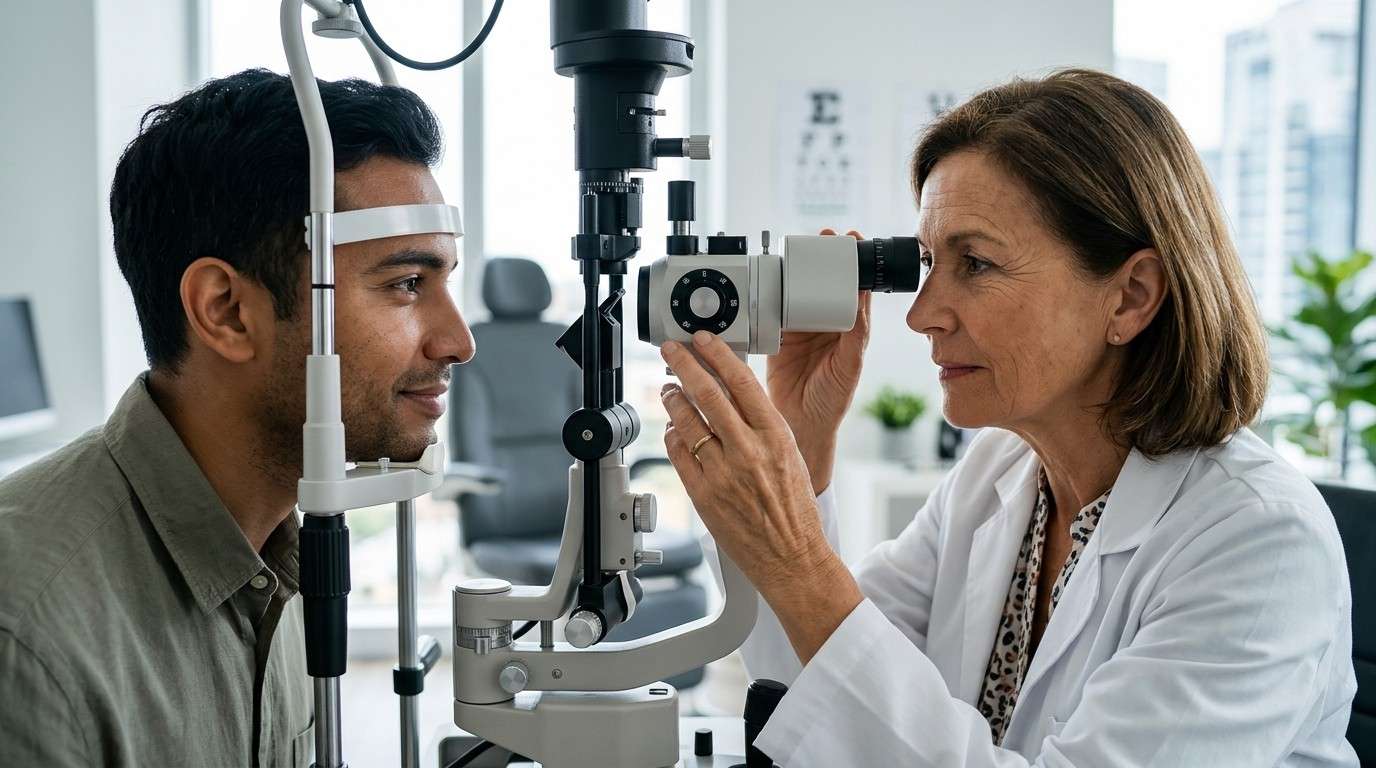
Slit Lamp Examination
This magnified exam evaluates structures inside the eye for abnormalities.
Retinal Imaging
Advanced retinal imaging captures detailed photos of the retina to detect early disease.
Pupil Dilation Exam
A pupil dilation exam allows the doctor to inspect the optic nerve and retina more thoroughly.
If needed, your provider may also recommend:
- Dry eye exam
- Contact lens fitting exam
- DMV eye exam
- Eye test for driving license
- Glasses eye exam
Signs You Need an Eye Checkup Sooner
Even if your annual visit isn’t due yet, certain symptoms mean you should schedule an eye checkup immediately.
Common Warning Signs
- Sudden blurry vision
- Double vision
- Eye pain
- Light sensitivity
- Floaters or flashes
- Persistent dryness
- Frequent headaches
Searching for an eye doctor near me quickly can help prevent serious complications if symptoms appear suddenly.
Special Eye Exams for Medical Conditions
Some patients need specialized monitoring due to health conditions or lifestyle factors.
Diabetic Eye Exams
A yearly diabetic eye exam is crucial because diabetes can damage blood vessels in the retina.
Contact Lens Exams
A contact lens exam evaluates eye health, lens fit, and prescription updates to reduce irritation and infection risks.
Dry Eye Evaluations
A dedicated dry eye exam helps identify tear film imbalance and treatment solutions.
Driving and DMV Testing
A DMV eye exam or eye test for driving license ensures drivers meet legal vision standards.
Eye Exam Costs, Insurance, and Same-Day Options
Many people delay care because they worry about eye exam cost. However, affordable options are widely available.
Depending on the provider and testing required, patients may find:
- Affordable eye exam packages
- Cheap eye exam promotions
- Eye exam deals
- Eye exam with insurance
- Flexible payment plans
Some clinics also offer:
- Walk-in eye exam
- Same day eye exam
- Online scheduling to book eye exam online
At Arizona’s Vision Eye Care Center, patients can receive professional, personalized care designed for the entire family.
Tips for Maintaining Healthy Vision Between Exams
1. Limit Digital Eye Strain
Follow the 20-20-20 rule when using screens.
2. Wear UV Protection
Quality sunglasses help prevent cataract development.
3. Control Chronic Conditions
Manage diabetes and blood pressure carefully.
4. Stay Hydrated
Proper hydration supports tear production and eye comfort.
5. Eat Eye-Healthy Foods
Leafy greens, fish, and colorful vegetables support retinal health.
6. Avoid Smoking
Smoking significantly increases cataract and macular degeneration risks.
7. Don’t Ignore Symptoms
Prompt care from an eye clinic can prevent worsening vision issues.
FAQs About Eye Exams
How often should you get an eye exam?
Most adults should get a routine eye exam every 1–2 years, while seniors and individuals with eye conditions may need annual visits.
What is included in a comprehensive eye exam?
A comprehensive eye exam often includes a visual acuity test, refraction test, retinal imaging, glaucoma testing, and a full ocular health exam.
Can I get an eye exam without insurance?
Yes, many providers offer an eye exam without insurance at affordable rates or through promotional packages.
How long does an eye examination take?
Most appointments last between 30 and 60 minutes depending on the tests performed.
Can I get glasses the same day as my exam?
Some clinics provide eye exam and glasses same day services for qualifying prescriptions.
What’s the difference between an eye screening and an eye exam?
An eye screening is a basic vision check, while a professional eye examination is more detailed and evaluates overall eye health.
Conclusion
Regular eye exams are one of the most important steps you can take to protect your long-term vision and overall wellness. Whether you need a yearly vision exam, specialized glaucoma screening, or a pediatric evaluation for your child, proactive care helps detect issues before they become serious.At Arizona’s Vision Eye Care Center, patients receive compassionate, advanced care from experienced professionals dedicated to lifelong eye health. Whether you’re searching for a comprehensive eye exam near me, a contact lens exam, or a trusted family eye care provider, scheduling routine visits can make all the difference.